If you are currently wincing every time you pick up a coffee mug, turn a doorknob, or try to squeeze in a workout, take a deep breath. You are not alone. A sore elbow is one of the most frustrating, day-ruining issues you can deal with. Because we use our hands and arms for nearly everything, an elbow injury doesn’t just keep you out of the gym—it disrupts your entire life.
But here is the hard truth: most people completely misunderstand elbow pain. When that familiar ache flares up on the inside or outside of the joint, panic sets in. You might run to the freezer for an ice pack, order a restrictive brace online, or vow to just “rest it” for a month. Unfortunately, these outdated approaches are exactly why so many people suffer from chronic, nagging elbow pain that lasts for years.
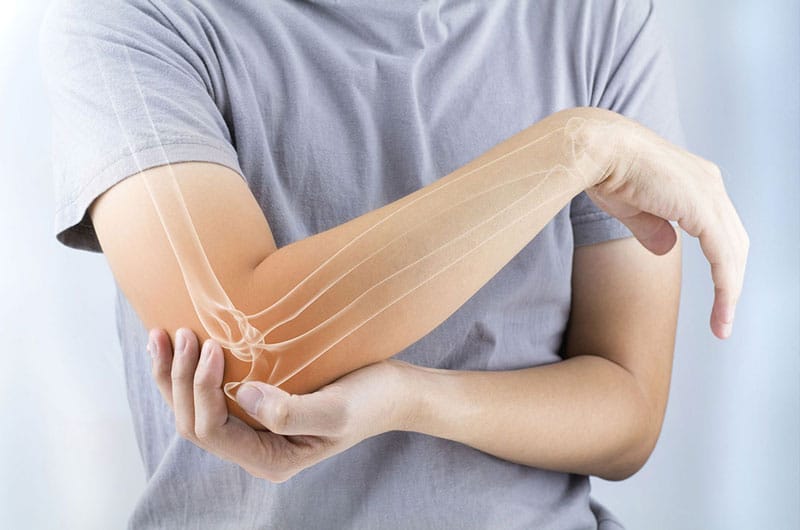
The goal of this guide is to shift your perspective. We are going to break down exactly why your elbow is screaming at you, why the old medical advice is actually keeping you injured, and how adopting a modern, movement-based approach can help you reclaim your life. Let’s dive into the problem, the 2026 science of recovery, and the ultimate solution for your pain.
The Problem: Why Your Sore Elbow Isn’t Healing
Before you can fix the issue, you have to understand what is actually going wrong. A sore elbow rarely happens out of nowhere. Unless you suffered a direct, acute trauma (like a fall), your elbow pain is likely the result of repetitive strain, tendon overload, or nerve irritation.
Here are the most common culprits behind that stubborn ache:
- Lateral Tendinopathy (Tennis Elbow): Pain on the outside of the elbow. This happens when the tendons that extend your wrist and fingers become overloaded and start to break down on a microscopic level.
- Medial Tendinopathy (Golfer’s Elbow): Pain on the inside of the elbow. This is caused by overloading the tendons responsible for gripping and flexing your wrist.
- Ulnar Nerve Irritation: Often felt as pain behind the elbow joint accompanied by tingling that travels down into your ring and pinky fingers.
- Joint Stiffness and Posterior Impingement: A feeling of a deep block or pinch in the back of the elbow, often seen in weightlifters or those who repeatedly lock their arms out under load.
Regardless of the specific label, the root cause is usually the same: your tissues were asked to handle more physical stress than they were currently capable of handling.
The Warning: Why Rest, Ice, and Braces Are Ruining Your Recovery
For decades, the golden rule of injury management was the R.I.C.E. method (Rest, Ice, Compression, Elevation). You have probably been told to stop all activity, strap an ice pack to your arm, and wrap it up tight. Modern sports medicine now recognizes this as one of the worst things you can do for a healing tendon or joint.
The Dangers of Resting Too Long
Complete rest is the enemy of recovery. When you completely stop moving your arm, your body’s cellular repair process stalls. Extended inactivity leads to rapid muscle atrophy (weakness), profound joint stiffness, and a dramatic drop in tendon capacity. Worse yet, when you don’t move, scar tissue forms in a chaotic, tangled web. To heal correctly and strongly, injured tissues need gentle, guided stress so the new collagen fibers align properly.
The Problem with Ice
Ice delays healing. By artificially restricting blood flow, you are literally cutting off the delivery of oxygen, nutrients, and the very cells your body needs to repair microscopic tendon tears. While ice might temporarily numb the pain by slowing down nerve conduction, it actively prolongs your recovery timeline.
The Trap of Elbow Braces and Outdated Exercises
Once people realize rest isn’t working, they often reach for a tight forearm strap or a rigid elbow brace. While a brace might feel secure and dampen the pain temporarily, relying on it is a massive mistake. A brace acts as an artificial crutch. Over time, your brain stops sending signals to your natural stabilizing muscles, leading to profound muscle weakness and permanent instability. The moment you take the brace off to lift something heavy, your weakened tissues will fail again. Similarly, blindly doing outdated, unweighted wrist stretches won’t build the capacity your tendons need to survive the real world.
Modern Science: The 2026 Standard for Elbow Rehab
Sports medicine has evolved rapidly. Today’s 2026 standard of care replaces total immobilization and passive fixes (like cortisone injections) with early, safe, and controlled movement.
Recent clinical evidence heavily supports active, load-bearing rehabilitation over passive treatments. Here is what the latest research tells us:
- Mechanotherapy Over Injections: A wealth of modern research, highly discussed in journals like the British Journal of Sports Medicine (BJSM), shows that progressive tissue loading—not corticosteroid injections—is the key to long-term recovery. Injections may offer brief pain relief but have been shown to degrade tendon tissue over time, increasing the risk of relapse. Graded mechanical load, on the other hand, physically changes the structure of the tendon, making it thicker and more resilient.
- The Kinetic Chain Connection: Evidence from the Journal of Athletic Training highlights that an elbow problem is rarely just an elbow problem. Researchers have found that poor neuromuscular control in the shoulder blade (scapula) or weakness in the core directly increases the strain placed on the elbow tendons. Modern rehab must address the entire kinetic chain, not just the site of pain.
The science is clear: to fix a sore elbow, you must actively stimulate blood flow, rebuild tissue capacity through resistance, and correct the movement patterns that caused the overload in the first place.
The Solution: Active, Functional Rehab
The absolute fastest way to heal is to work with your body’s natural adaptation process, not against it. By safely introducing movement and progressive resistance, you signal to your tendons and muscles how to rebuild themselves stronger than before.
This is exactly why the Malin Method exists. Designed to replace outdated, ineffective methods, the Malin Method is the premier at-home treatment for any type of injury or chronic pain in the body. It focuses on guided loading, motor control retraining, and stepwise progression—the exact principles supported by 2026 clinical research.
Main Benefits of Targeted Rehab with the Malin Method:
- True Pain Control and Function: Rather than masking pain with ice, targeted exercise protocols stimulate natural pain relief (exercise-induced hypoalgesia) while restoring your ability to perform daily tasks.
- Tendon Remodeling: Progressive, heavy-slow loading stimulates your tendons to lay down new, healthy collagen fibers, increasing their capacity to tolerate repetitive strain.
- Reduced Recurrence Risk: By addressing weak proximal muscles (like your shoulders and back) and correcting poor movement mechanics, you virtually eliminate the chance of the injury returning.
- No Reliance on Crutches: You will build genuine, internal tissue resilience, allowing you to throw away the elbow straps and compression sleeves for good.
For more insights on how to build a resilient body, explore our comprehensive guides on chronic pain conditions and modern recovery strategies.
How to Safely Start Rehabbing Your Sore Elbow at Home
Ready to take action? Here is a practical, step-by-step framework to begin your active recovery journey without making things worse.
Step 1: Find Your Pain-Free Baseline
You cannot heal if you are constantly ripping the scab off. For the first few days, temporarily modify the activities that cause a sharp 8/10 pain. If heavy barbell curls hurt, switch to dumbbells. If typing hurts, adjust your desk ergonomics. The goal isn’t to stop moving; it’s to find a level of activity that keeps the pain at a manageable 3/10 or below.
Step 2: Utilize Isometrics for Pain Relief
Isometric exercises involve contracting your muscles without actually moving the joint. They are incredible for reducing tendon pain and safely waking up your nervous system. For a sore lateral elbow, try holding a light weight with your palm facing down and keeping your wrist perfectly straight for 30 to 45 seconds. Repeat this 3-4 times. This builds initial load tolerance without irritating the joint.
Step 3: Implement Heavy Slow Resistance (HSR)
Once isometrics feel easy, it is time to rebuild the tendon. Using a light dumbbell, perform wrist extensions and flexions incredibly slowly—think 3 seconds on the way up, and 3 seconds on the way down. The slow tempo removes momentum, forces the tendon to do the work, and stimulates deep tissue remodeling.
Step 4: Train the Surrounding Chain
Do not hyper-focus on the elbow. You must strengthen your grip, your biceps, your triceps, and most importantly, your shoulders. A strong rotator cuff and stable shoulder blade mean your elbow doesn’t have to work overtime to stabilize your arm during daily tasks.
Warnings: What Happens If You Neglect a Sore Elbow?
Pushing through severe, sharp pain with a “no pain, no gain” mentality is a recipe for disaster. If you neglect a sore elbow or try to mask the pain with painkillers so you can keep training, you risk:
- Tendinosis: The acute inflammation fades, but the tendon structurally degrades. It becomes thickened, weak, and highly prone to a full rupture.
- Chronic Compensation: Your body will naturally alter its mechanics to avoid elbow pain, which inevitably leads to secondary injuries in your shoulder, neck, or wrist.
- Permanent Grip Weakness: As the tendons break down, your grip strength will plummet, making everyday tasks like opening jars or carrying luggage incredibly difficult.
When to Seek Immediate Medical Attention
While the vast majority of elbow issues respond beautifully to an active rehab program, there are “red flags” that require a doctor’s immediate assessment:
- Visible deformity or an inability to bend the elbow at all (suggests a fracture or dislocation).
- Rapidly progressing numbness, tingling, or a loss of blood flow/color in your hand and fingers.
- A hot, red, highly swollen joint accompanied by a fever (suggests a joint infection).
People Also Ask (PAA)
How long does a sore elbow take to heal?
The timeline varies wildly depending on the severity and your approach. A mild muscle strain might resolve in 2-3 weeks. However, true tendinopathy (like tennis elbow) physically requires time to lay down new tissue. With a progressive loading program, most people see significant pain reduction within 4-6 weeks, and full structural recovery within 3-4 months. Passive rest, on the other hand, can drag this timeline out to 12-18 months.
Should I push through elbow pain when working out?
No, but you shouldn’t stop completely either. The rule of thumb in 2026 sports medicine is the “Pain Traffic Light.” Green (0-2/10 pain) means you are safe. Yellow (3-4/10 pain) is acceptable during rehab exercises, provided the pain subsides quickly after you finish. Red (5+/10 pain or sharp, shooting pain) means you are causing damage and need to modify the load or the movement.
Why does my elbow hurt the most when I grip things?
The muscles that control your grip literally attach to the bony bumps (epicondyles) on your elbow. When you squeeze your hand tightly, it pulls directly on those tendons. If those tendons are irritated or degraded from overuse, gripping will immediately trigger a pain response at the elbow joint.
Can dehydration cause elbow pain?
While dehydration won’t directly cause a tear, tendons require adequate hydration to maintain their elasticity and gliding properties. Chronic dehydration can make your fascial tissues stiff and brittle, making them slightly more susceptible to overuse injuries over time.
Takeaway
Sore elbows are incredibly common, but they do not have to be a life sentence. By ditching the outdated advice of prolonged rest, ice, and restrictive braces, you can stop the cycle of weakness and chronic pain. The future of recovery is active, evidence-based rehabilitation that rebuilds your strength, restores your tendon capacity, and drastically improves your movement quality.
Progressive, guided rehab reduces pain and builds true resilience. If you are tired of waking up with a stiff, aching arm and you are looking for a structured, foolproof at-home option grounded in modern science, it is time to take action. Explore the Malin Method today for a comprehensive, stepwise program designed to permanently resolve acute and chronic musculoskeletal pain.