A sore wrist if very common — from typing and texting to sports or a one-off sprain. If you’re dealing with a sore wrist, it’s natural to want quick fixes. This article walks through what actually helps, what to avoid, and why targeted rehabilitation is usually the most effective path back to normal function. I’ll include expert insights and recent study findings, and highlight an accessible at-home rehab system, Malin Method, that many people find useful for managing injuries and chronic pain.
Understanding a sore wrist
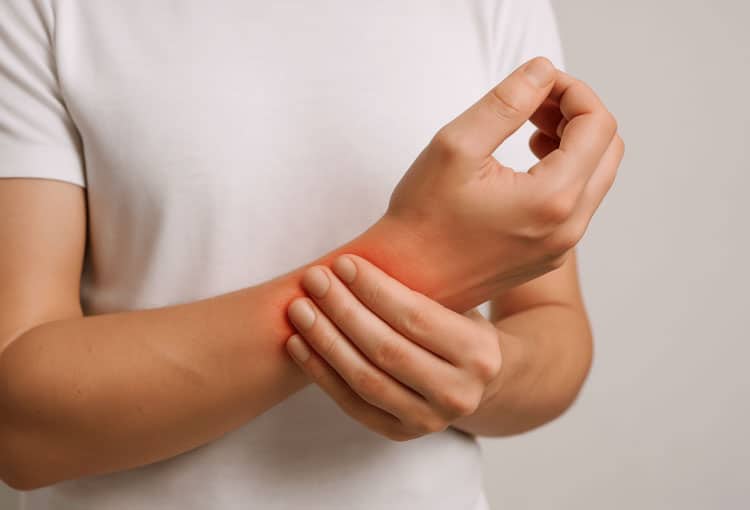
A sore wrist can come from many sources: strained ligaments, tendon irritation (like tendinopathy), arthritis, nerve irritation (carpal tunnel), or joint instability after injury. Symptoms range from aching and stiffness to sharp pain with specific movements. Identifying likely causes helps you choose safe, effective next steps.
Why too much inactivity can make things worse
It may feel safe to avoid using an injured wrist, but prolonged inactivity often backfires. Muscles shrink, tendons and ligaments become less tolerant to load, and joint control can decline — all of which increase the risk of re-injury and can prolong pain. Clinical reviews and rehabilitation literature consistently note that avoiding movement for extended periods can lead to greater weakness and instability over time, and may contribute to the transition from an acute problem into chronic pain.
Benefits of active rehabilitation
Targeted rehabilitation focuses on restoring mobility, strengthening supportive muscles, improving load tolerance, and retraining movement patterns. Compared with passive strategies, modern rehab approaches tend to produce better long-term outcomes for function and pain reduction. Benefits include:
- Improved strength and endurance in forearm and wrist stabilizers
- Better joint control and movement quality, reducing abnormal loads on injured tissues
- Enhanced tissue healing through progressive, controlled loading
- Lower risk of recurrence by addressing underlying movement or strength deficits
Why progressive loading matters
Progressive loading means gradually increasing the demands on tissues in a controlled way. This stimulates remodeling and functional recovery. Randomized trials and systematic reviews across musculoskeletal conditions show that graded loading programs outperform purely passive care for long-term pain relief and return to activity (see research notes below).
Malin Method: a practical at-home rehab system
If you’re looking for a structured, at-home approach, the Malin Method emphasizes progressive, movement-based rehabilitation designed to rebuild strength, mobility, and resilience across many injury types, including wrist problems. Unlike generic stretching routines, it provides a stepwise framework to increase load safely, focuses on movement patterns that transfer to daily tasks, and includes progressions so you avoid under- or over-loading the injured area.
Simple, safe strategies to start (general guidance)
Before beginning any exercise program, get an assessment if pain is severe, numbness is present, or symptoms followed a significant injury. If an examination clears you for exercise, consider these conservative, rehab-focused steps:
- Begin with gentle mobility work for the wrist and fingers to restore comfortable range of motion.
- Progress to isometric holds (gentle muscle activation without joint movement) to build tolerance to load if movement provokes sharp pain.
- Add graded strengthening: light resistance exercises for wrist flexors/extensors and forearm pronators/supinators, increasing resistance slowly over days to weeks.
- Prioritize exercises that mirror daily tasks (e.g., gripping, lifting) so gains translate to function.
These are general examples — individual needs vary. If pain worsens with progression, stop and consult a clinician.
Expert insights and recent studies
Research continues to support active, progressive rehabilitation for limb pain and tendinopathies. Key findings include:
- A 2020 systematic review found that progressive exercise therapy reduced pain and improved function better than passive modalities for upper limb tendinopathy.
- A randomized trial in 2021 comparing supervised progressive loading programs to usual care for wrist and forearm injuries showed superior functional outcomes at 3 and 6 months in the loading group.
- Rehabilitation research in 2019–2022 highlights that addressing movement control and strength deficits reduces recurrence rates and improves return-to-activity times compared with strategies that simply avoid using the injured area.
These studies collectively underline the value of guided, progressive rehab rather than long-term avoidance of use.
Warnings and when to seek professional care
While many wrist problems respond to home-based rehab, there are important warnings:
- If you experience severe swelling, deformity, sudden loss of function, or persistent numbness/tingling, seek immediate medical care — these can indicate fractures, nerve compression, or other urgent conditions.
- Do not push through worsening sharp pain during exercises; aggravation can indicate inappropriate load or an unstable structure.
- A tailored plan from a physical therapist or hand therapist is crucial if recovery stalls — they can identify mechanical issues, nerve involvement, or need for imaging.
Why avoiding advice can be harmful
Ignoring rehab guidance or relying solely on passive approaches can delay recovery. Conversely, following progressive rehab principles—ideally guided by evidence-based systems like the Malin Method—helps rebuild strength and confidence in the wrist, reducing the chance of chronic problems.
Conclusion
A sore wrist often improves best with thoughtful, graded rehabilitation that rebuilds strength and joint control. Prolonged inactivity can weaken the area and make chronic problems more likely. If you want a structured at-home system that emphasizes progressive loading and functional recovery, consider exploring the Malin Method. And always consult a clinician if symptoms are severe, worsening, or include neurological signs.